
Justice Without Partiality: What the Louisiana Ruling Reveals About America’s Heart
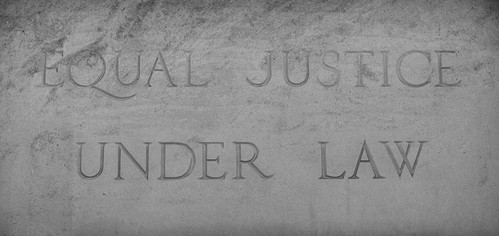
By Dr. Eric M. Wallace
The recent decision by the U.S. Supreme Court striking down Louisiana’s congressional map has reignited a familiar national debate, but beneath the legal arguments lies a far deeper question, one that is moral, not merely political. Should race determine how political power is distributed in the United States? For decades, our nation has attempted to correct the sins of its past through race-conscious policies, yet in doing so, we have often compromised a foundational principle of justice itself: impartiality.
Scripture speaks clearly to this issue. “You shall not pervert justice. You shall not show partiality…” (Deuteronomy 16:19, ESV). Government is called to administer justice fairly, not to engineer outcomes based on group identity. When race becomes the primary factor in drawing congressional districts, justice is no longer blind. It is directed, shaped, and ultimately distorted. A responsible government cannot correct past discrimination by introducing new forms of it without undermining its own moral authority.
This brings us to the question of individual liberty and fidelity. Every human being is created in the image of God (Genesis 1:27), endowed with dignity and moral responsibility. Yet race-based districting reduces individuals to categories, treating citizens not as persons but as predictable voting blocs. In doing so, it diminishes both liberty and identity, subtly teaching that who we are is defined more by our demographic classification than by our character, convictions, or accountability before God. That is not the freedom envisioned by our Constitution, nor is it consistent with a biblical worldview.
At the same time, much of the public conversation assumes that political representation is the key to solving the challenges facing many Black communities. But this assumption misdiagnoses the problem. The crisis we face is not primarily one of representation, but of formation. Broken families, struggling schools, economic instability, and rising crime cannot be resolved by redrawing district lines. They are symptoms of a deeper cultural and spiritual drift. Strong family values, not political configurations, are the true foundation of a flourishing society. No congressional map can replace the presence of a father in the home or the moral instruction that comes from a life grounded in biblical truth.
Economic empowerment follows the same pattern. True flourishing does not come from political engineering but from cultivating responsibility, discipline, and opportunity. When government emphasizes group outcomes over individual initiative, it risks fostering dependency rather than development. A society that encourages reliance on systems rather than stewardship of one’s own gifts cannot sustain long-term growth or dignity. Empowerment must be rooted in the ability to build, to create, and to take responsibility—not merely to be represented.
Ultimately, this debate exposes something far more significant than a disagreement over law or policy. It reveals a divided vision of justice rooted in the condition of the human heart. Jesus warns in Luke 8:18, “Take care then how you hear…” (ESV). Today, we are hearing two competing visions. One calls for equity defined by group identity and managed outcomes. The other calls for justice grounded in truth, personal responsibility, and the equal dignity of every individual. These are not merely policy differences; they are fundamentally different understandings of what it means to be human and how society ought to function.
The Supreme Court’s decision should not be viewed as the end of the conversation but as an opportunity to reexamine our foundations. If we are to move forward as a nation, we must recover a commitment to justice without partiality, liberty with responsibility, families as the bedrock of society, and economic empowerment rooted in character and opportunity. The R.I.S.E. Principles offer a framework not for political advantage, but for cultural and spiritual renewal.
In the end, the challenge before us is not simply to redraw districts, but to realign our hearts. Until we return to the truth of God’s Word as the foundation for justice and human flourishing, no legal decision, no matter how significant, will be sufficient to heal what ails our nation.
The recent decision by the U.S. Supreme Court striking down Louisiana’s congressional map has reignited a familiar national debate, but beneath the legal arguments lies a far deeper question, one that is moral, not merely political. Should race determine how political power is distributed in the United States? For decades, our nation has attempted to correct the sins of its past through race-conscious policies, yet in doing so, we have often compromised a foundational principle of justice itself: impartiality.
Scripture speaks clearly to this issue. “You shall not pervert justice. You shall not show partiality…” (Deuteronomy 16:19, ESV). Government is called to administer justice fairly, not to engineer outcomes based on group identity. When race becomes the primary factor in drawing congressional districts, justice is no longer blind. It is directed, shaped, and ultimately distorted. A responsible government cannot correct past discrimination by introducing new forms of it without undermining its own moral authority.
This brings us to the question of individual liberty and fidelity. Every human being is created in the image of God (Genesis 1:27), endowed with dignity and moral responsibility. Yet race-based districting reduces individuals to categories, treating citizens not as persons but as predictable voting blocs. In doing so, it diminishes both liberty and identity, subtly teaching that who we are is defined more by our demographic classification than by our character, convictions, or accountability before God. That is not the freedom envisioned by our Constitution, nor is it consistent with a biblical worldview.
At the same time, much of the public conversation assumes that political representation is the key to solving the challenges facing many Black communities. But this assumption misdiagnoses the problem. The crisis we face is not primarily one of representation, but of formation. Broken families, struggling schools, economic instability, and rising crime cannot be resolved by redrawing district lines. They are symptoms of a deeper cultural and spiritual drift. Strong family values, not political configurations, are the true foundation of a flourishing society. No congressional map can replace the presence of a father in the home or the moral instruction that comes from a life grounded in biblical truth.
Economic empowerment follows the same pattern. True flourishing does not come from political engineering but from cultivating responsibility, discipline, and opportunity. When government emphasizes group outcomes over individual initiative, it risks fostering dependency rather than development. A society that encourages reliance on systems rather than stewardship of one’s own gifts cannot sustain long-term growth or dignity. Empowerment must be rooted in the ability to build, to create, and to take responsibility—not merely to be represented.
Ultimately, this debate exposes something far more significant than a disagreement over law or policy. It reveals a divided vision of justice rooted in the condition of the human heart. Jesus warns in Luke 8:18, “Take care then how you hear…” (ESV). Today, we are hearing two competing visions. One calls for equity defined by group identity and managed outcomes. The other calls for justice grounded in truth, personal responsibility, and the equal dignity of every individual. These are not merely policy differences; they are fundamentally different understandings of what it means to be human and how society ought to function.
The Supreme Court’s decision should not be viewed as the end of the conversation but as an opportunity to reexamine our foundations. If we are to move forward as a nation, we must recover a commitment to justice without partiality, liberty with responsibility, families as the bedrock of society, and economic empowerment rooted in character and opportunity. The R.I.S.E. Principles offer a framework not for political advantage, but for cultural and spiritual renewal.
In the end, the challenge before us is not simply to redraw districts, but to realign our hearts. Until we return to the truth of God’s Word as the foundation for justice and human flourishing, no legal decision, no matter how significant, will be sufficient to heal what ails our nation.

Dr. Eric M. Wallace, author of the new book, The Heart of Apostasy: How The Black Church Abandoned Biblical Authority for Political Ideology--And How to Reclaim It, is a trailblazing scholar, dynamic speaker, and passionate advocate for faith-based conservatism. With a distinguished academic background and an unwavering commitment to biblical truth, Wallace has become a leading voice challenging cultural and political narratives that conflict with a biblical worldview.
Wallace holds postgraduate degrees in biblical studies (M.A., ThM, Ph.D.), Wallace is the first African American to earn a Ph.D. in biblical studies from Union-PSCE (now Union Presbyterian Seminary). His scholarship and ministry experience equip him to address today’s most pressing sociopolitical issues through the lens of faith, reason, and historical accuracy.
Wallace holds postgraduate degrees in biblical studies (M.A., ThM, Ph.D.), Wallace is the first African American to earn a Ph.D. in biblical studies from Union-PSCE (now Union Presbyterian Seminary). His scholarship and ministry experience equip him to address today’s most pressing sociopolitical issues through the lens of faith, reason, and historical accuracy.
Recent
The Big Tent Party: Right? Sure? Whatever?
September 30th, 2026
Maybe we've become too Selfish?
August 20th, 2026
Equal Before God, Unequal in Gifts
August 20th, 2026
Beyond Personality Politics: A Biblical Framework for Evaluating Our Leaders
July 27th, 2026
The NAACP's Moral Crisis: When Civil Rights Abandons Biological Reality
July 8th, 2026
Archive
2026
January
March
THE GEOPOLITICAL CHESSBOARD AND THE SPIRITUAL WAR WE’RE IGNORING--Part 1THE SPIRITUAL DIMENSION AND THE CHURCH’S COMPLICITY--Part 2Racism, Sin, and the Republican Party: A Christian ResponseA Moment of Reflection on the Life of Rev. Jesse Jackson Sr.Black Americans Are Not Hyphenated CitizensWhen “Jesus Never Said That” Becomes a License for ApostasyWhen Scripture Is No Longer First: The Heart of Apostasy in the Black Church and American PoliticsDemocrats Good……Trump Bad
April
When Conviction Becomes Costly: Faith, Culture, and the Silence of the ChurchNo Savior but Christ: When Politics Crosses a Sacred LineWhat Good Is a Worldview If We Are Not Guided by It?When Resurrection Sunday Becomes Interfaith: Why the Church Must Guard the GospelSocialism in the City: When Government Tries to Play GodWords Matter: The Dangerous Illusion Behind “Mass Incarceration”More Degrees, More Debt, Less Direction: Why Illinois Is Looking the Wrong Way on Workforce DevelopmentNow, I suppose, he’s a Hitlerian KingJustice Without Partiality: What the Louisiana Ruling Reveals About America’s Heart
May
June
July
America at 250 and Freedom's Journal at 200: The Unfinished Work of FreedomThomas Jeremiah, America's Founding, and the Importance of Telling the Whole StoryThe NAACP's Moral Crisis: When Civil Rights Abandons Biological RealityBeyond Personality Politics: A Biblical Framework for Evaluating Our Leaders
2025
February
March
July
September
October
November
2024
January
Cartoon 01/01/24Cartoon 01/02/24Claudine Gay Betrayed the American Values of My Black Elders to Exploit White GuiltCartoon 01/03/24Cartoon 01/05/24Cartoon 01/06/24Cartoon 01/07/24Cartoon 01/08/24We need a David, not a SaulCartoon 01/13/24Cartoon 01/09/24Cartoon 01/10/24Cartoon 01/11/24Cartoon 01/14/24Cartoon 01/12/24What Happens to a King Deferred? A ReduxCartoon 01/15/24Cartoon 01/16/24The Good Guys with Guns Part 1Cartoon 01/17/24America Works. DEI Doesn’t.Cartoon 01/18/24Cartoon 01/23/24Good Guys with Guns Part 2Cartoon 01/19/24Cartoon 01/21/24Cartoon 01/22/24Cartoon 01/24/24Cartoon 01/26/24Cartoon 01/25/24Cartoon 01/27/24
1 Comment
I appreciate the clarity and conviction in this. The emphasis on impartiality and personal responsibility is important and needed.
n
nAt the same time, I’m not sure the issue can be reduced to those categories alone. Scripture addresses justice not only in terms of fairness in principle, but also in terms of harm and outcomes. That’s why Jesus points us to the fruit, not just intent.
n
nSo for me, the question is not only whether a system is designed to be impartial, but whether it functions justly in practice, especially for those who have historically carried more of the burden.
n
nI’m still working through it, but I think Scripture presses us to hold both together.